
June 14, 2016
Create a functional, inviting space that brings cooking, hosting, and outdoor living together.
A garden shed is an important part of any outdoor space. It can be used for storage, gardening, hobbies, or as a dedicated workspace. Yet many sheds end up becoming forgotten dumping grounds simply because they weren’t the right fit to begin with.
Choosing the right shed from the start helps ensure it stays useful, functional, and something you’re proud to have in your yard. Here are a few key considerations to help you make the right choice.
Start by Identifying Its Use
The first step in choosing the right shed is deciding how you plan to use it.
If you’ll be using your shed frequently, you may want easy access, solid pathways, and enough interior space to move around comfortably. A shed used for gardening may be best located near your garden beds or greenhouse, while a general storage shed can be placed farther from the house.
Think about how often you’ll access the shed and what you’ll store inside. Items like lawnmowers or barbecues may only be used seasonally, while tools and supplies might be accessed weekly. Your usage will directly influence the size, placement, and design of your shed.
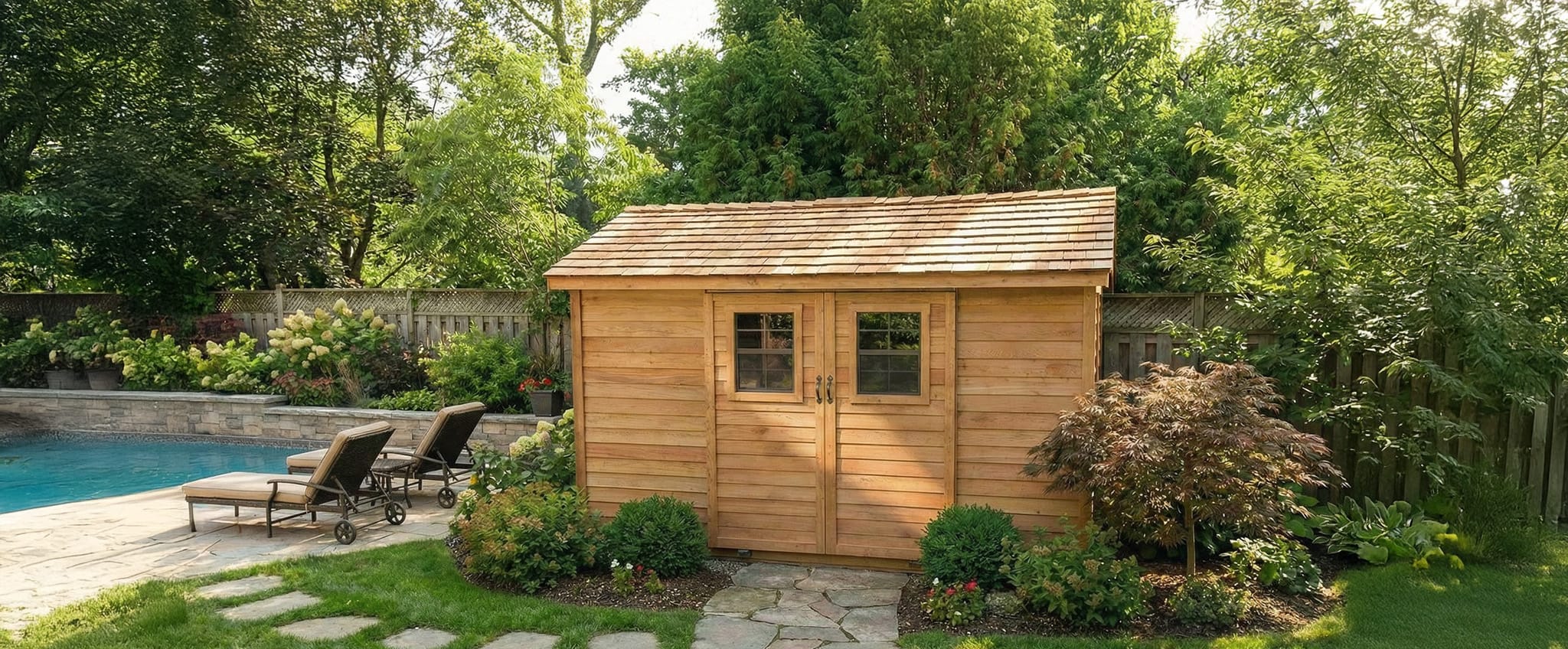
Choose the Right Material for Your Shed
Most garden sheds are made from wood, metal, or vinyl, each with its own benefits.
Wood sheds are popular for their natural appearance and ability to blend into outdoor spaces. They are versatile and customizable, though they do require periodic maintenance.
Metal and vinyl sheds are often lower maintenance options and can be more resistant to moisture, but they may not offer the same warmth or aesthetic appeal as wood.
When choosing a material, consider your climate, maintenance preferences, and how the shed will complement the rest of your yard.
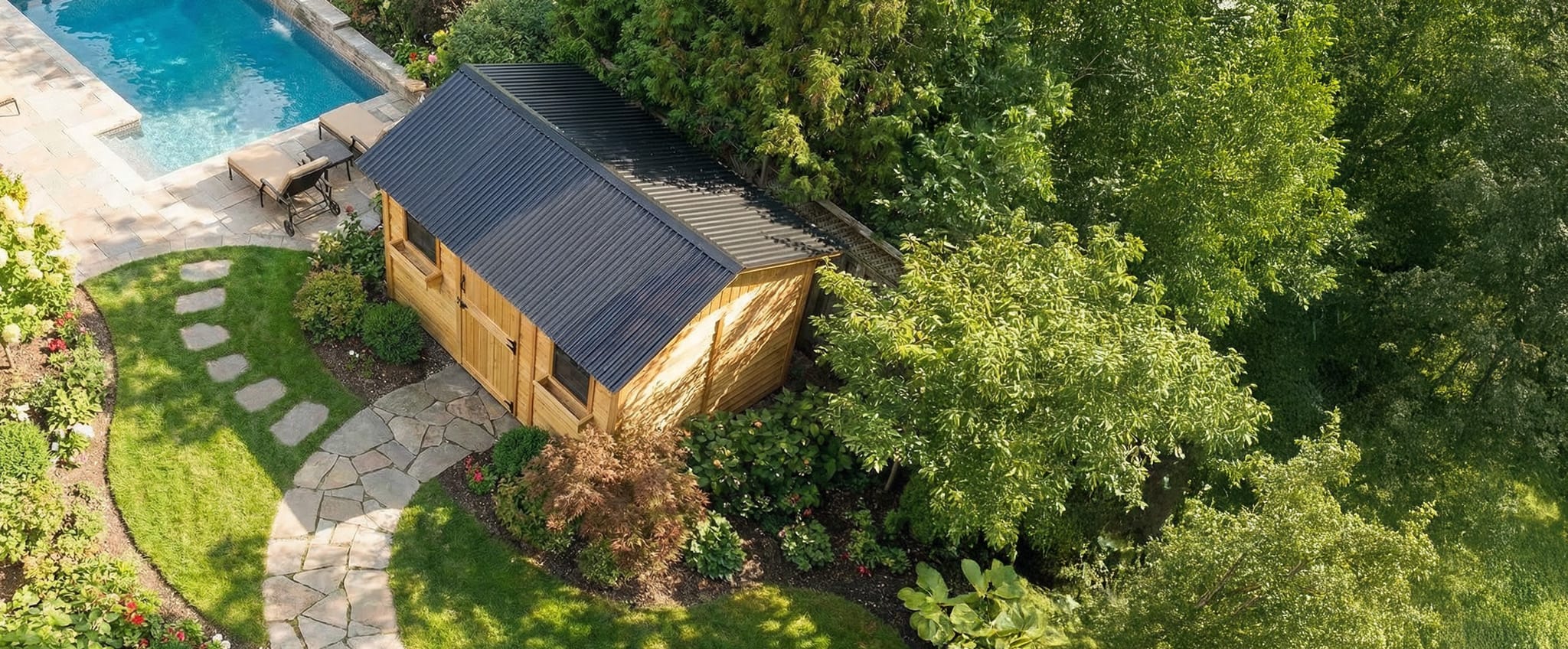
Concealing Your Shed (or Helping It Blend In)
Some homeowners prefer their shed to blend quietly into the landscape rather than stand out.
One option is to stain or paint your shed in darker or natural tones so it fades into the background. Adding trellises, climbing plants, or surrounding landscaping can also soften its appearance.
Green roofs are another growing trend. These involve planting low-maintenance vegetation on the roof, which can help with insulation while visually integrating the shed into the garden.
Sheds as Showpieces
For others, the shed is meant to be a feature rather than something hidden away.
Decorative sheds can act as focal points in a garden and even double as hobby rooms, studios, or quiet retreats. Details like windows, trim, painted finishes, and thoughtful placement can transform a shed into an intentional part of your outdoor design.
If space is limited, compact sheds or wall-mounted storage solutions can still offer functionality without overwhelming the yard.
Consider the Security of Your Shed
Security is especially important if you plan to store valuable tools or equipment.
Look for sheds with solid doors, quality hardware, and lockable entry points. Placing the shed within view of the house or adding exterior lighting can also help deter unwanted access.
Taking security into account early ensures your shed remains a safe and practical storage solution for years to come.